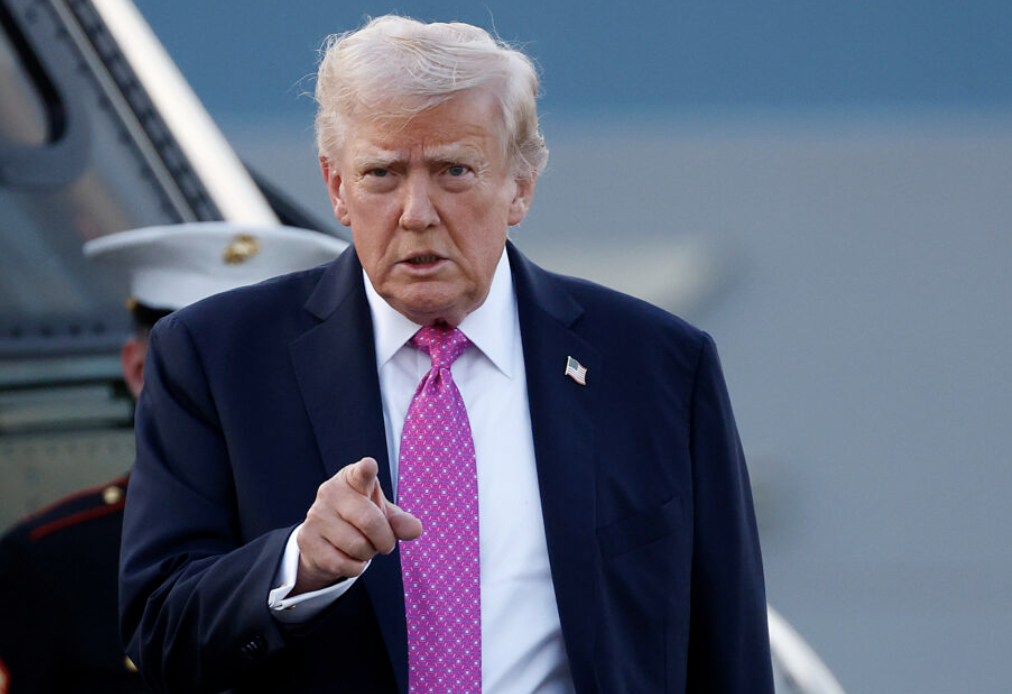

President Donald Trump reacted on Sunday to the victory of Germany’s conservative opposition leader Friedrich Merz in the country’s national election, which resulted in the defeat of incumbent Chancellor Olaf Scholz and his Social Democrat Party. Trump praised the outcome in a statement on Truth Social, drawing comparisons to political shifts in the United States.
“LOOKS LIKE THE CONSERVATIVE PARTY IN GERMANY HAS WON THE VERY BIG AND HIGHLY ANTICIPATED ELECTION,” Trump wrote. “MUCH LIKE THE USA, THE PEOPLE OF GERMANY GOT TIRED OF THE NO COMMON SENSE AGENDA, ESPECIALLY ON ENERGY AND IMMIGRATION, THAT HAS PREVAILED FOR SO MANY YEARS.
“THIS IS A GREAT DAY FOR GERMANY, AND FOR THE UNITED STATES OF AMERICA UNDER THE LEADERSHIP OF A GENTLEMAN NAMED DONALD J. TRUMP,” he added. “CONGRATULATIONS TO ALL — MANY MORE VICTORIES TO FOLLOW!!!”
❗️🇩🇪⚔️🇺🇲 – “My top priority will be achieving U.S. independence. Last week’s statements make it clear that the U.S. is relatively indifferent to Ukraine’s future,” said Friedrich Merz, Germany’s new Chancellor.
Donald Trump congratulated Merz and his CDU/CSU party on their… pic.twitter.com/HJ79ImFTjp
— 🔥🗞The Informant (@theinformant_x) February 23, 2025
Germany’s center-right Christian Democratic Union (CDU), led by Merz, secured approximately 29% of the vote, according to exit polls. The right-wing Alternative for Germany (AfD) placed second with a strong performance, nearly doubling its support from the previous election.
The snap election was called amid economic difficulties and rising concerns over illegal immigration. Merz has pledged a stricter immigration policy, though his stance remains more moderate than that of AfD, which has advocated for large-scale deportations. Merz’s proposed 15-point plan includes tightening border controls and expediting the deportation of rejected asylum seekers.
Despite its electoral gains, AfD is expected to be excluded from the governing coalition. Merz has stated that he will not partner with the party, which remains controversial in Germany’s political landscape. However, AfD’s leaders, Alice Weidel and Tino Chrupalla, have pointed to their party’s significant growth as an indication of rising support for their platform.
AfD received endorsements from Trump and billionaire entrepreneur Elon Musk ahead of the election. Party leaders have suggested that their momentum positions them well for Germany’s next national election, expected in 2029.
The election results mark a shift in Germany’s political direction following Scholz’s tenure, which was characterized by challenges in economic management and debates over immigration policy. With coalition negotiations now underway, Merz will work to assemble a governing alliance in the coming weeks.