
When I was younger and a little more wide-eyed, there was one job I always thought sounded perfect: weather anchor.
The reason was simple. Outside of NFL Draft analysis, how many jobs let you be wrong that often and still keep showing up on television as if nothing happened?
As it turns out, I might have been aiming too low. I could have just become an “expert” during the Donald Trump era.
Politico published a piece Tuesday with the headline, “Energy experts said gas prices would stay high. Why were they wrong?”
The article is about what you would expect from that headline. It asks why so many energy experts missed the mark when predicting the long-term damage from rising fuel prices under Trump.
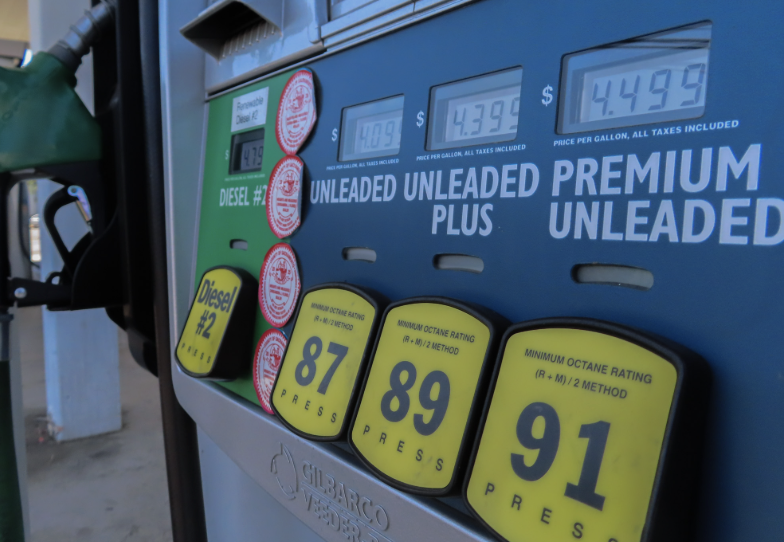
As most Americans heard, and many felt directly, gas prices jumped during the worst stretch of the Iran conflict. The assumption from plenty of analysts was that those prices would stay painful for a while. Except they didn’t.
Instead, prices have been falling fast, undercutting predictions of a long summer defined by expensive gas and economic strain.
Funny how that keeps happening.
Politico put the reality plainly: “Instead of spiraling upward, the average price at the pump has plummeted 70 cents per gallon in a month from a peak of $4.56.”
To its credit, Politico at least acknowledged that it had helped circulate those earlier predictions. The outlet noted that experts had warned of $150-a-barrel oil, $5 gasoline, and even possible summer recessions, and that those forecasts were widely quoted in the media, including by Politico itself.
One oil analyst told the outlet, “It’s the weirdest thing. I’ve never seen a market like this.”
Now, I am not going to pretend I’m qualified to explain every assumption behind those forecasts. Energy markets are complicated. Global conflict, supply chains, production decisions, investor behavior, and consumer demand can all shift quickly. Even smart people can get caught leaning the wrong way.
But that is not really the bigger issue.
The problem is not that experts are sometimes wrong. That happens. Any field dealing with complex systems is going to produce bad calls from time to time. The real problem is what happens after those calls are made.
The prediction gets blasted everywhere. The correction barely makes a sound.
A dramatic forecast about $150 oil or $5 gas becomes a headline, a talking point, a warning, and sometimes even a political weapon. It spreads because it is alarming, simple, and useful to whatever story people already want to tell.
But when reality moves in a different direction, the follow-up rarely gets the same attention. There may be a quieter piece later explaining why things did not unfold as expected, but by then the original narrative has already done its work.
That is where the modern media environment becomes exhausting.
It rewards confidence more than accuracy. It rewards urgency more than caution. And it often treats forecasts less like uncertain projections and more like plot points in a story that has already been written.
Once a narrative takes hold — energy crisis, summer of pain, economic spiral — it becomes hard to dislodge. Even when prices begin falling, the original frame lingers because fear tends to travel faster than correction.
None of this requires a conspiracy. It only requires bad incentives.
Experts want to be relevant. Media outlets want attention. Audiences have been trained to react more strongly to crisis than calm. Put those together, and you get the same pattern over and over: loud predictions, quiet revisions, and very little accountability in between.
Over time, that wears people down. It does not just damage trust in one forecast or one analyst. It damages trust in the whole idea of expert consensus, even in cases where the experts may be right.
That is the part that should bother everyone, regardless of politics.
The real question is not whether gas prices rise or fall in a given month. Markets will move. Predictions will miss. That is unavoidable.
The bigger question is whether anyone can still separate signal from narrative. And with experts and media outlets so often feeding each other’s worst habits, that separation is getting harder to make.